Patios and fire pit areas
A patio is only as good as what is underneath it. Most failed patios in this area failed at the base, not the surface. We excavate to proper depth, compact in lifts, and build the base to handle frost heave through a New England winter.
- Paver patios
- Fire pit areas and seating walls
- Walkways and front entries
- Steps and landings
- Repair and releveling of sunken patios
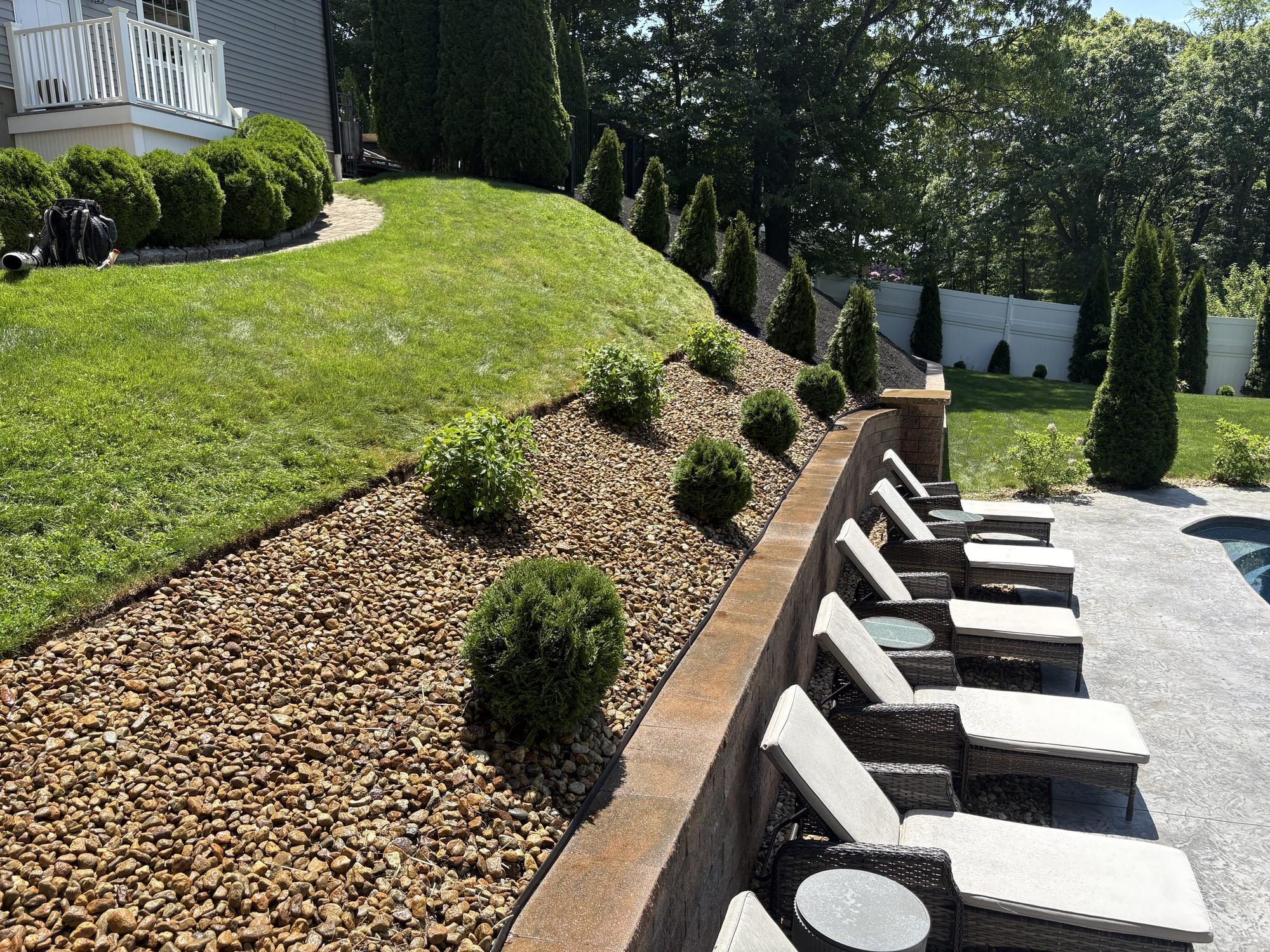
Retaining walls and regrading
Retaining walls solve two problems: they hold back a slope, and they turn unusable pitched ground into flat, usable yard. Both need drainage designed in from the start. A wall built without proper backfill and drainage will bulge within a few seasons.
We also handle lawn regrading, asphalt millings driveways and parking area installs.
French drains and yard drainage
A wet yard is rarely a lawn problem. It is almost always a water problem, and around here it usually comes from one of three places: roof runoff dumping against the foundation, a neighbor's grade sending water your way, or a low spot with nowhere to drain.
A french drain is a gravel trench with perforated pipe that collects water underground and carries it somewhere it can do no harm. Done properly it disappears into the lawn and you forget it exists. Done poorly it silts up within a few years and you are back where you started.
What separates one that lasts
Consistent pitch, which is why we trench with a laser level rather than by eye. Proper fabric so soil does not migrate into the stone and clog it. Washed stone rather than whatever is cheapest. And an outlet that actually goes somewhere — a drain that ends in a low corner of the yard has just moved the puddle.
- French drains
- Downspout and gutter tie-ins
- Dry wells
- Catch basins and surface drains
- Foundation and basement water issues
- Regrading to move water away from the house
We start by walking the property during or just after a heavy rain if we can. Seeing where the water actually goes beats guessing from a dry yard, and it often turns out the fix is smaller and cheaper than expected.
How the process runs
1. We walk it with you
We look at the grade, where water goes during a heavy rain, and how you actually want to use the space. This visit is free.
2. A few options, not one
You get several approaches at different price points so you can pick what fits, rather than a single take-it-or-leave-it number.
3. Build
One crew from start to finish. The person who quoted the job is on site.
The best time of year to build
Late summer through fall is often ideal here. The ground is workable, the mowing schedule has eased up, and we can typically build into November depending on weather. Spring books out fastest, so a fall build usually means a shorter wait.